
Every morning, parents hand their children over at the school gate and walk away. What happens on the other side, we mostly have to imagine.
I've spent years designing schools, and I've come to believe that what a building lets us see matters enormously. Where adults can't naturally see, children who dominate or exclude others have room to do it. Hidden corners, dead-end corridors and the far side of the playground are where problems tend to grow.
The urbanist Jane Jacobs called the answer "eyes on the street": places feel safer when ordinary people are naturally looking on, not because of guards or cameras. Schools work the same way. When children play within view of everyday life, adults can step back and give them more freedom.
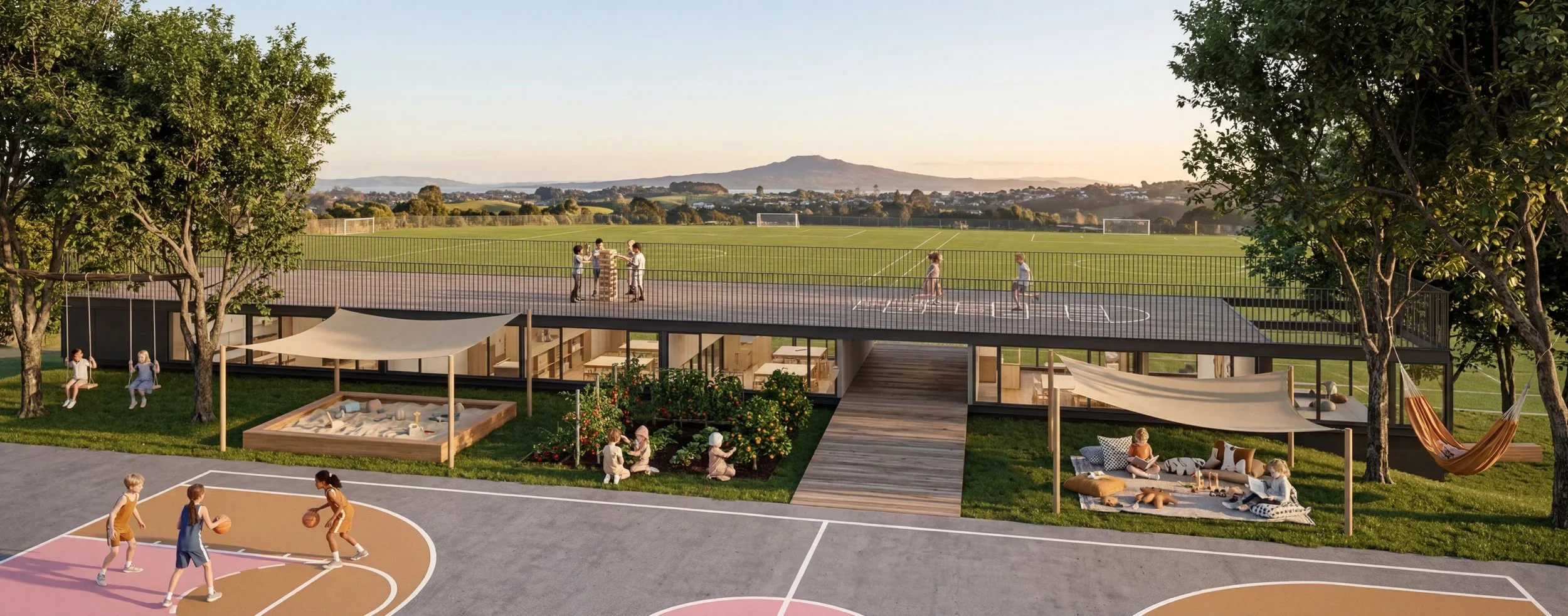
Above: Our design for a school in central Auckland, adding new learning spaces and a library while retaining play space and a visual connection through to the sports fields beyond.
This isn't about watching children all the time. They need dens and hideaways too. The difference is between being watched and being held in view. On public projects such as Te Manawa in Auckland, I've worked with CPTED (Crime Prevention Through Environmental Design) specialists who study how people actually use a space before and after it's built. Schools deserve the same care.
What to look for when choosing a school
Can you see into the playground and classrooms, or is everything behind walls and fences?
Are there corners where no adult would naturally see children?
Does the school welcome parents in at handover, or keep families at the gate?
Want the full story? Read the complete essay on Substack → and subscribe for free to get each new essay in your inbox.
Designing or improving a school or learning space? See how I can help →